

It can—but not in the way you might think.
When coffee people describe a coffee as having a “clean” cup, they aren't talking about cleanliness. They mean the flavors tend to be clear and distinct.
So what does that have to do with washing coffee?
Quite a bit.
Coffee beans are actually the seeds inside a fruit. After coffee cherries are picked, the fruit has to be removed from the seeds, and those seeds need to be dried before they can be roasted.
How that happens is called processing, and it can have a real effect on how the coffee tastes.
You don't need to become a coffee-processing expert to understand it. But if you've ever wondered why one coffee tastes bright and citrusy while another tastes like berries or tropical fruit, processing is one of the clues.
Washed: Clean, Bright, and Clear
Washed, or wet, processing is one of the most common ways coffee is processed.
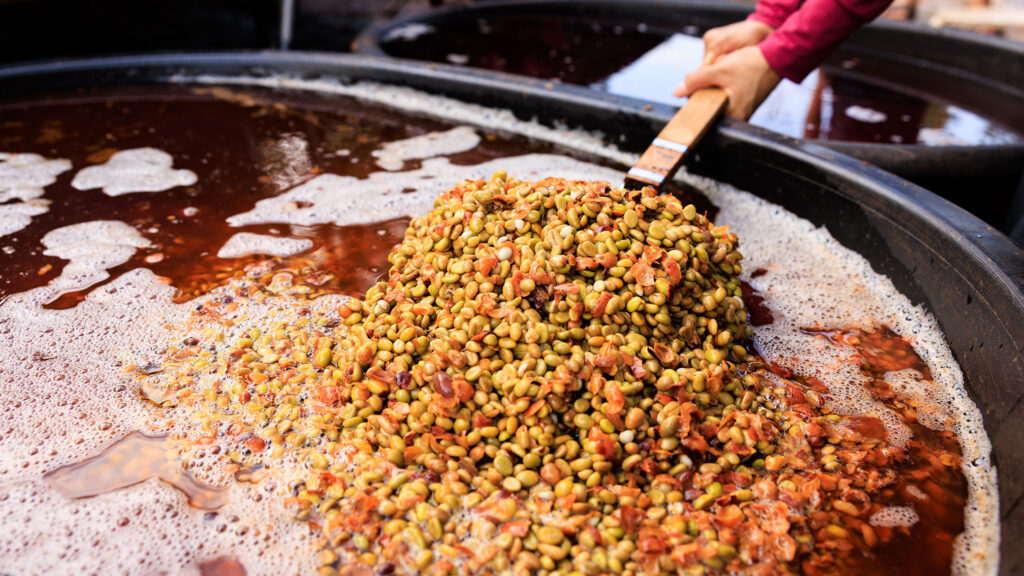
After the cherries are harvested and sorted, the outer skin and pulp are removed. The coffee is then fermented so that the remaining mucilage can be removed, followed by washing and drying.
Because the coffee is separated from most of the fruit before it dries, washed coffees often have a clear, bright flavor and lighter body. You might notice citrus, floral, or other crisp flavors.
This is where the word “clean” comes in.
A clean-tasting coffee isn't necessarily better, and it certainly isn't more sanitary. It simply means that the flavors tend to be distinct and easy to identify.
If you like coffees that are bright, crisp, and straightforward, washed coffees may be a good place to start.
Natural: Let the Fruit Stay
Natural processing is one of the oldest ways of processing coffee.
Instead of removing the fruit right away, whole coffee cherries are dried with the seeds still inside. The cherries are turned regularly as they dry, which can take several weeks. Once the fruit is completely dry, it is removed from the coffee seed.
Because the coffee dries while surrounded by the fruit, natural coffees often have more fruit-forward flavors, more sweetness, and a fuller body than washed coffees.
Think berries, tropical fruit, dried fruit, or sometimes wine-like flavors.
Natural processing can also make practical sense in places where water is scarce or difficult to access. Unlike washed processing, which uses water to remove the fruit from the coffee seed, natural processing relies primarily on drying the whole coffee cherry. That can make it a useful option for producers working in areas where water is limited.
So when you see a natural coffee, you're not necessarily just looking at a choice made for flavor. The processing method can also reflect the conditions a producer is working with.
If you tend to reach for fruity, sweet, or fuller-bodied coffees, a natural process might be worth trying.
Honey: Somewhere in Between
Honey processing falls somewhere between washed and natural processing.
The skin of the coffee cherry is removed, but some of the sticky mucilage is left on the seed while it dries. Despite the name, there's no honey involved. The name comes from the sticky, honey-like coating left on the coffee.
Producers can leave different amounts of mucilage on the coffee, which can create a range of results. You'll sometimes see terms such as white, yellow, red, or black honey used to describe these variations.
In general, honey-processed coffees can offer a combination of sweetness, body, and clarity.
If washed coffees are a little too bright for you and naturals are a little too fruity, honey processing might be an interesting middle ground.
What About Anaerobic Coffee?
This is where coffee processing starts to get really interesting.
Anaerobic means “without oxygen.” In anaerobic fermentation, coffee is placed in a controlled environment with very little oxygen while fermentation takes place. Producers can carefully manage factors such as time, temperature, and the fermentation environment.
Unlike washed, natural, and honey, anaerobic describes a fermentation technique rather than one simple way of removing the fruit. It can be used alongside different processing approaches.
Why should you care?
Because anaerobic fermentation can create some pretty distinctive coffees. You might find intense fruit, spice, sweetness, or other flavors that seem unusual compared with a more traditional washed coffee.
If you've ever picked up a bag that says anaerobic and wondered what that actually means, now you know: the coffee has gone through a controlled fermentation process with limited oxygen.
And if you like trying coffees that taste a little different, it might be worth putting one in your cart.
And Then There Are Even More Experiments
Coffee producers are constantly experimenting with fermentation and processing.
Carbonic maceration, for example, uses carbon dioxide in a controlled environment and was inspired by techniques used in winemaking. It can produce coffees with particularly distinctive fruit and fermentation characteristics.
There are other experimental techniques, too. The coffee industry continues to explore different fermentation environments, drying techniques, and combinations of traditional methods.
You don't need to know all of them.
But it is pretty fascinating to realize that the way a coffee cherry is handled after harvest can change what eventually ends up in your cup.
So Which Process Should You Choose?
There's no “best” processing method.
That's one of the most useful things to understand.
Washed doesn't mean better than natural. Natural doesn't mean better than washed. Honey isn't automatically sweeter, and anaerobic doesn't automatically mean more interesting.
They are simply different ways of handling coffee, and each can bring out different characteristics.
A quick way to think about it:
- Washed: often bright, clear, crisp, and lighter-bodied
- Natural: often sweet, fruity, and fuller-bodied
- Honey: often sweet, balanced, and somewhere between washed and natural
- Anaerobic: often distinctive, fruit-forward, and fermentation-driven
These are tendencies, not rules. The coffee variety, where it was grown, how it was harvested and dried, and how it was roasted and brewed all matter, too.
But the next time you're looking at a bag of coffee and wondering what it might taste like, processing is one more piece of information you can use.
You don't have to memorize what every term means.
You can simply notice what you like.
If you love a bright, citrusy coffee, maybe look for another washed coffee. If you find yourself reaching for the fruity ones, try a natural. If you're curious about something completely different, give an anaerobic coffee a shot.
Coffee bags give us a lot of information. Processing is one of the pieces that can actually help you figure out what you like.


